Comfrey Medicinal Uses
If you’ve spent any time in the herbal world, you’ve likely heard whispers about comfrey. Some call it “knitbone.” Others swear by it for sore muscles, bruises, and skin repair. But what are the real comfrey medicinal uses, and how do you use this powerful plant safely?

If you love growing medicinal herbs in your backyard or adding time-tested remedies to your natural home apothecary, comfrey deserves a closer look.
What Is Comfrey?
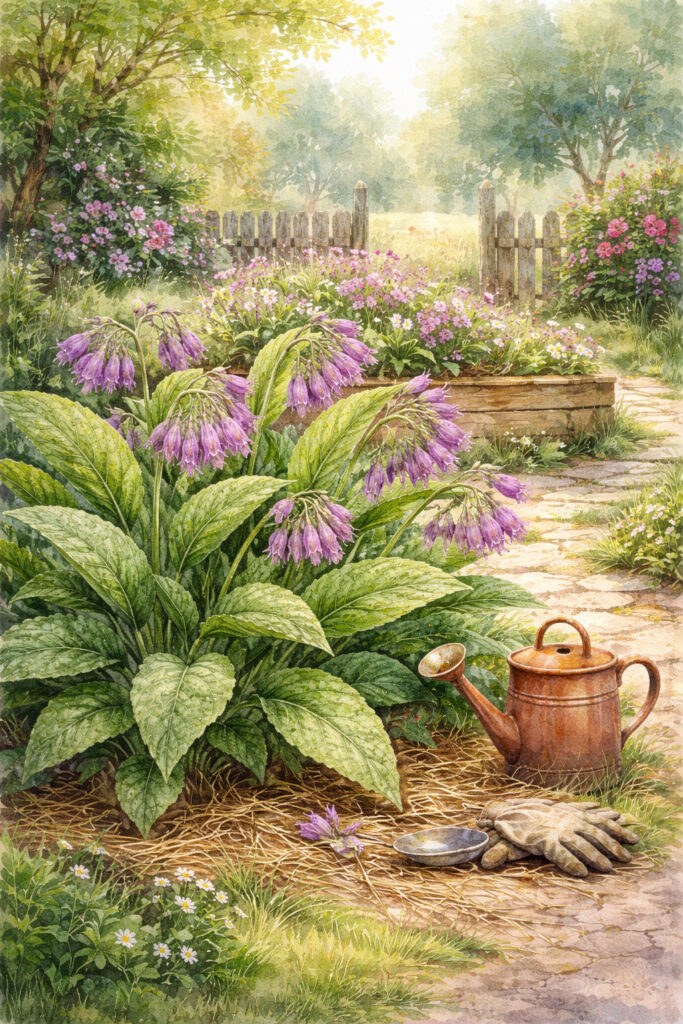
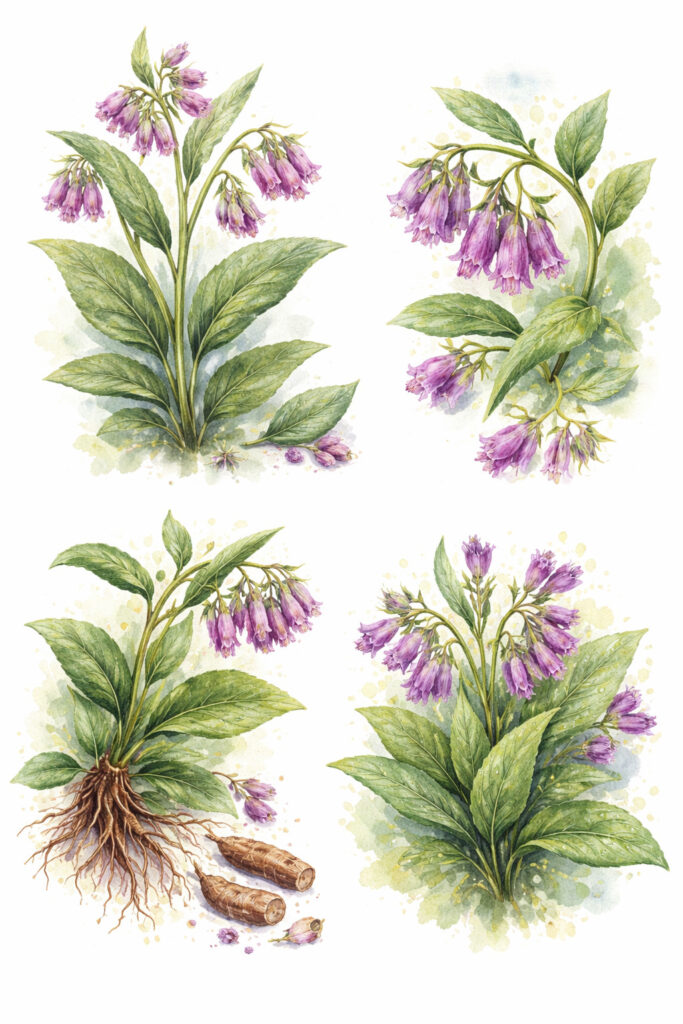
Comfrey (Symphytum officinale) is a fast-growing perennial herb with broad, fuzzy leaves and bell-shaped purple flowers. Herbalists have used it for centuries across Europe and parts of Asia.
Historically, people applied comfrey externally for:
- Bone injuries
- Sprains and strains
- Bruises
- Wounds
- Skin inflammation
Its nickname, “knitbone,” comes from its traditional use in supporting bone healing.
Comfrey thrives in rich soil and grows vigorously, making it a favorite among homesteaders. Once established, it returns year after year with little effort.
Top Comfrey Medicinal Uses
Let’s break down the most common and researched comfrey medicinal uses.
1. Comfrey for Bone Healing
Herbalists traditionally used comfrey for broken bones and fractures. While modern medicine handles fractures differently today, comfrey remains popular as a topical support for:
- Sprains
- Strains
- Minor fractures (external application only)
- Joint discomfort
Comfrey contains allantoin, a compound known to support cell regeneration and tissue repair. When applied externally in a salve or poultice, many people report faster recovery and reduced discomfort.
⚠️ Important: Never apply comfrey over deep wounds or broken skin without proper guidance.
2. Comfrey for Bruises and Swelling
Bruises respond especially well to comfrey salve. Many herbalists recommend applying a thin layer to:
- Black-and-blue marks
- Swollen joints
- Minor impact injuries
Comfrey helps calm inflammation and supports tissue repair, which may help discoloration fade more quickly.
3. Comfrey for Muscle and Joint Pain
If you struggle with sore muscles after gardening, workouts, or long days on your feet, comfrey may help.
Topical comfrey preparations are commonly used for:
- Back discomfort
- Knee soreness
- Shoulder tension
- Arthritic joints
Several clinical studies have examined topical comfrey creams for back and joint pain with promising results. Most commercial products use processed extracts that remove harmful compounds (more on that below).
4. Comfrey for Skin Healing
Comfrey supports:
- Minor cuts
- Scrapes
- Dry, cracked skin
- Minor burns
Because it encourages cell proliferation, comfrey can speed up surface-level skin repair. However, herbalists caution against sealing infection inside the skin. Always clean wounds thoroughly before applying any herbal salve.
5. Comfrey for Inflammation
Comfrey contains rosmarinic acid, which contributes anti-inflammatory properties. When used topically, it may help reduce swelling and tenderness.
People often use it for:
- Tendon irritation
- Minor sprains
- Overworked hands
How to Use Comfrey Safely
Here’s where we need to slow down.
Comfrey contains pyrrolizidine alkaloids (PAs). These compounds can harm the liver when taken internally in significant amounts.
Because of this:
- Do NOT take comfrey internally.
- Use comfrey externally only.
- Avoid long-term continuous use.
- Avoid using on large areas of the body.
- Do not use during pregnancy or breastfeeding.
Many modern herbalists recommend using PA-free comfrey products for extra safety.
Always consult a qualified healthcare professional before using any medicinal herb.
Click the Image to Shop!
Use Code THESTONEHEARTHFARMHOUSE to get 15% off your order!

How to Make Comfrey Salve (Simple Recipe)
One of the most common comfrey medicinal uses involves making a salve.
Ingredients:
- 1 cup dried comfrey leaves (or root)
- 1 cup olive oil
- 1 ounce beeswax
Instructions:
- Infuse dried comfrey in olive oil using a double boiler on low heat for 2–4 hours.
- Strain out plant material.
- Return infused oil to heat.
- Add beeswax and stir until melted.
- Pour into tins or jars.
- Let cool completely.
Apply a thin layer to sore muscles, bruises, or minor skin irritations.
Store in a cool, dark place for up to one year.
Fresh Comfrey Poultice
For immediate use:
- Chop fresh comfrey leaves.
- Crush them into a paste.
- Apply directly to the affected area.
- Cover with clean cloth.
- Leave on for 1–3 hours.
Use short-term only and monitor skin carefully.
Growing Comfrey at Home
Many homesteaders grow comfrey not only for medicinal uses but also for compost and livestock support.
Comfrey:
- Improves soil health
- Attracts pollinators
- Makes nutrient-rich compost tea
- Returns every year
It spreads aggressively, so plant it where you want it permanently.
How to Identify Comfrey (Plant Identification Guide)
Before using comfrey medicinally, you need to identify it correctly. Accurate plant identification protects you and ensures you harvest the right herb.
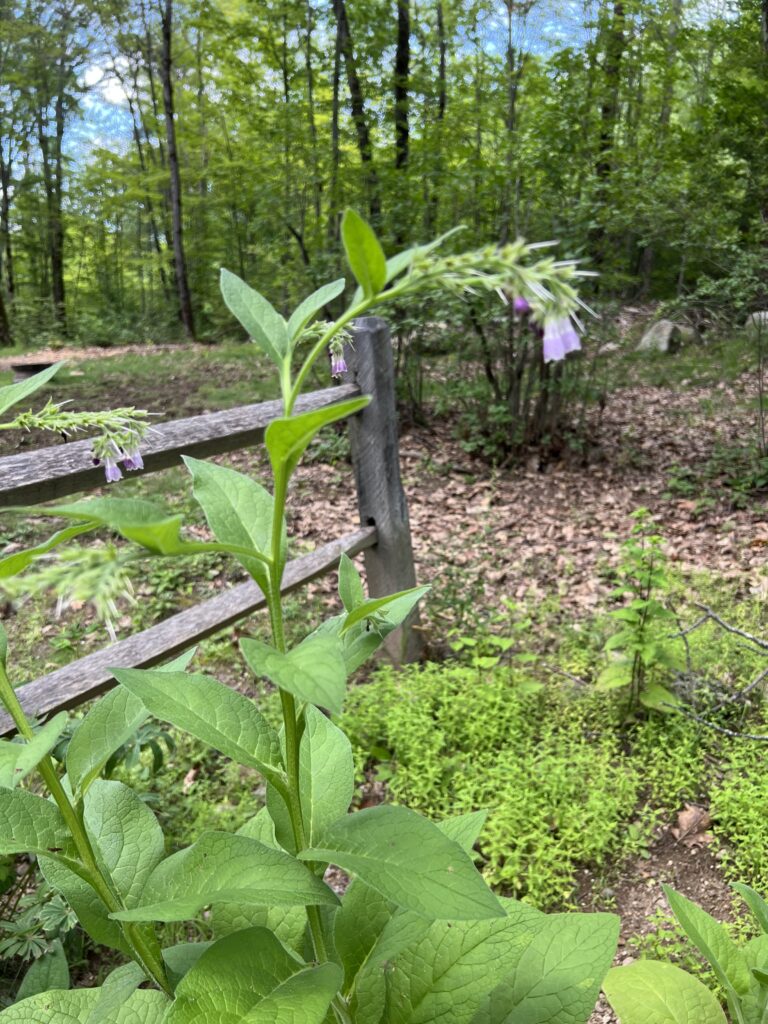
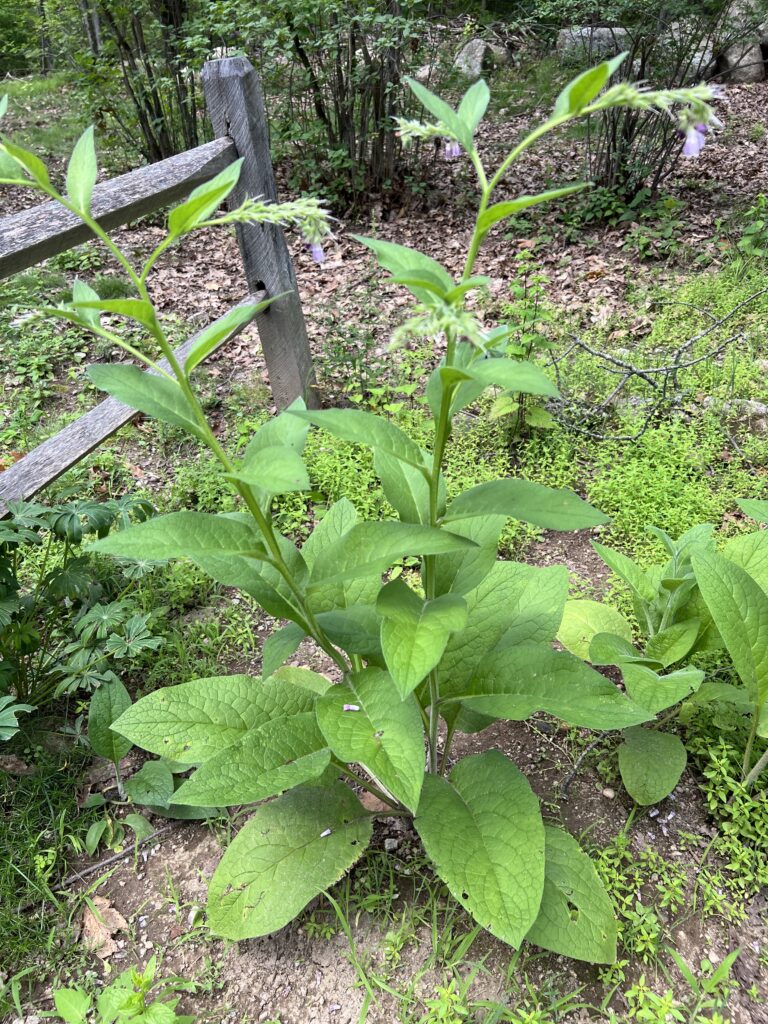
Comfrey is a hardy perennial that grows in large clumps and returns year after year once established. Here’s how to recognize it:
Key Identification Features
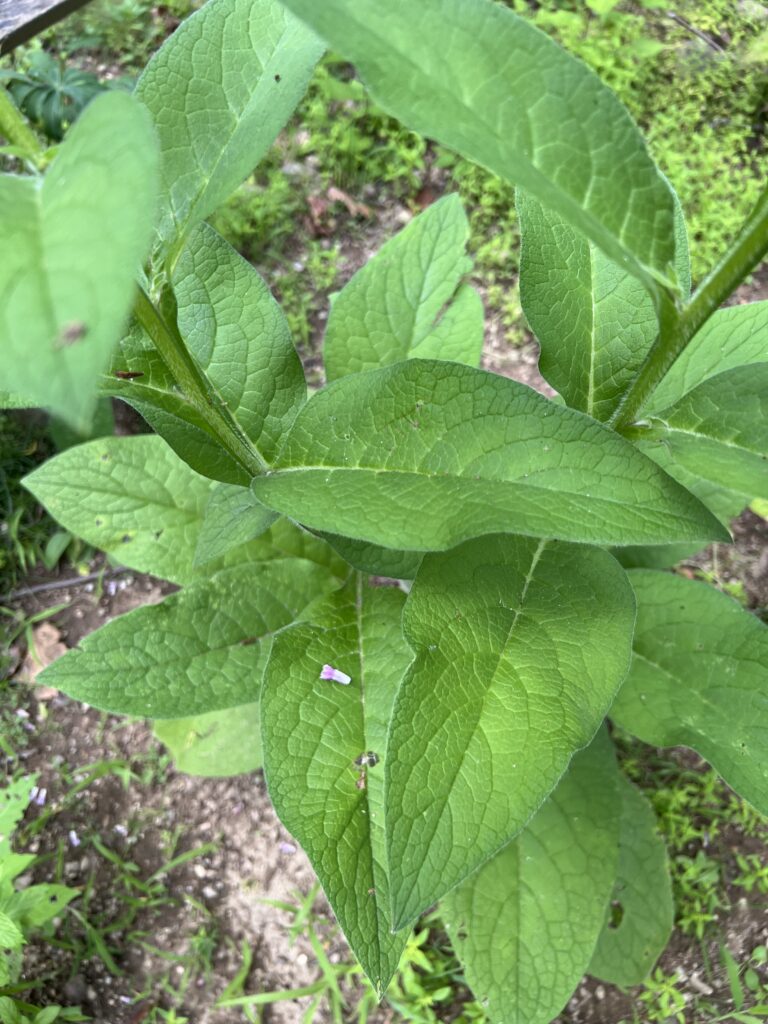
1. Large, Fuzzy Leaves
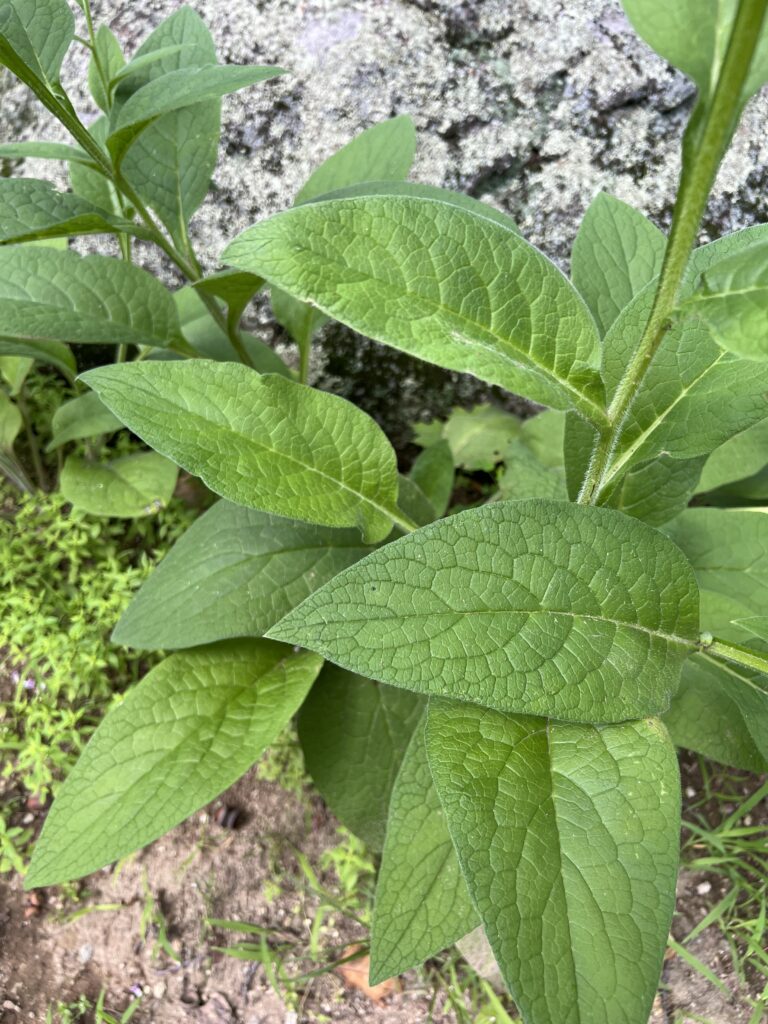
Comfrey leaves grow long and broad, often reaching 8–12 inches. They feel rough and slightly prickly due to tiny hairs covering the surface.
2. Bell-Shaped Flowers
The flowers hang downward in clusters. They look like small bells and typically bloom in:
- Purple
- Pink
- Creamy white
They appear in late spring to early summer.
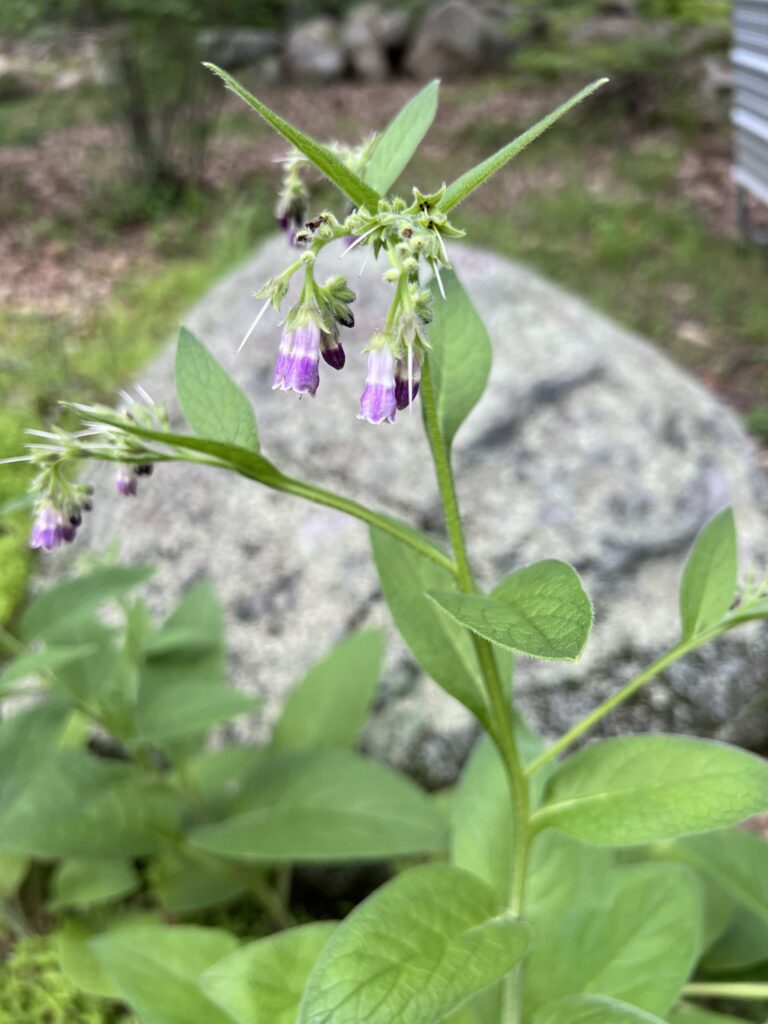
3. Thick, Hairy Stems
The stems grow upright and feel bristly to the touch.
4. Deep Taproot
Comfrey develops a thick, black outer root with a creamy white interior. The root grows deep into the soil and becomes difficult to remove once mature.
5. Growth Habit
It forms a wide, leafy mound and can grow 2–4 feet tall. It spreads easily and often naturalizes in gardens.
Comfrey Look-Alikes (Important Safety Section)
Several plants resemble comfrey at first glance. Always confirm identification before harvesting.
1. Foxglove (Dangerous Look-Alike)
Foxglove can sometimes confuse beginners because of its broad leaves.
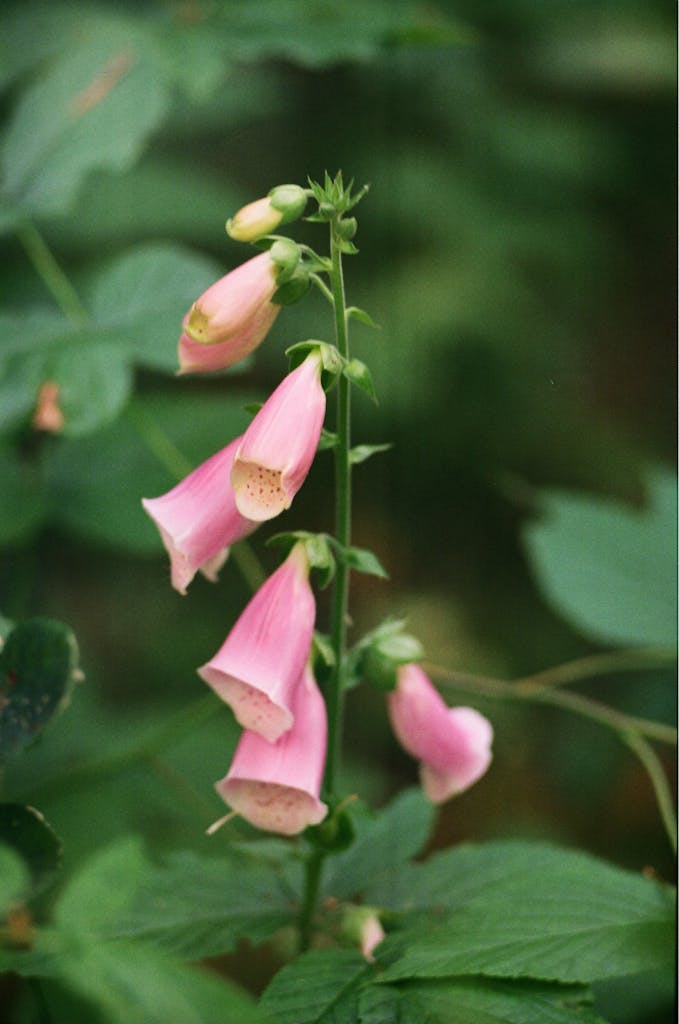
How to tell the difference:
- Foxglove flowers grow upright on a tall spike.
- Comfrey flowers droop downward in clusters.
- Foxglove leaves feel softer and less bristly.
⚠️ Important: Foxglove is toxic if ingested. Never confuse the two.
2. Borage
Borage belongs to the same plant family (Boraginaceae) and shares fuzzy leaves.
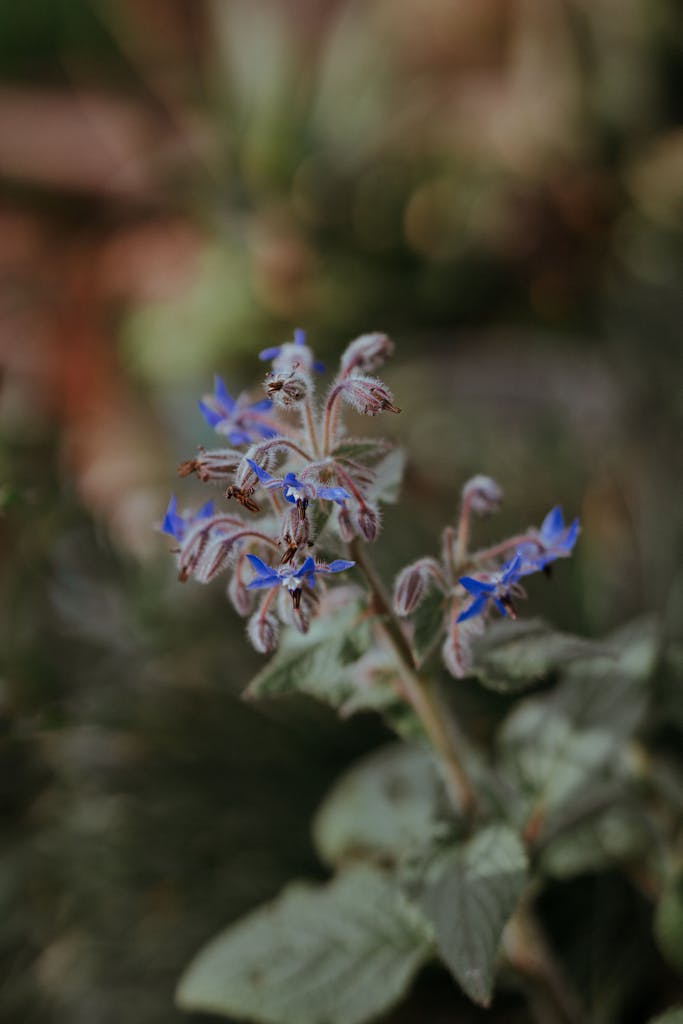
Differences:
- Borage has bright blue, star-shaped flowers.
- Comfrey has bell-shaped, drooping flowers.
- Borage grows more loosely and spreads differently.
3. Lungwort
Lungwort has spotted leaves that resemble young comfrey leaves.
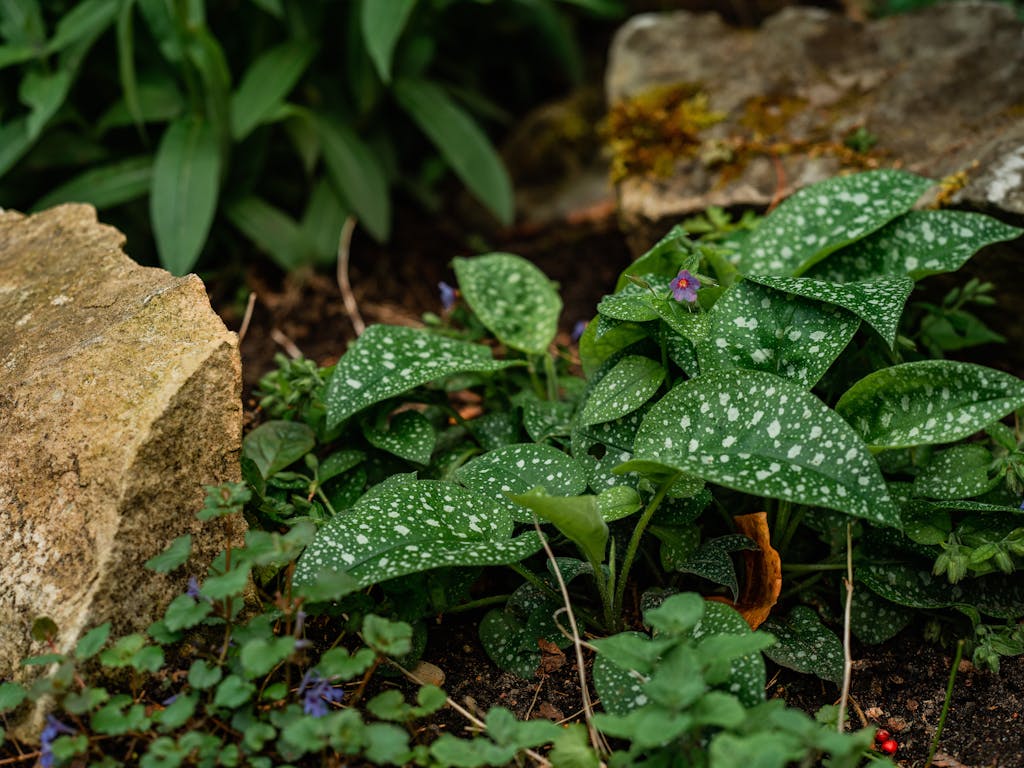
Key difference:
Lungwort leaves often display white or silver speckles. Comfrey leaves remain solid green.
Mullein vs. Comfrey (Common Look-Alike)
Mullein often gets mistaken for comfrey because both plants produce large, fuzzy leaves. At first glance, they look very similar — especially to beginner herbalists.
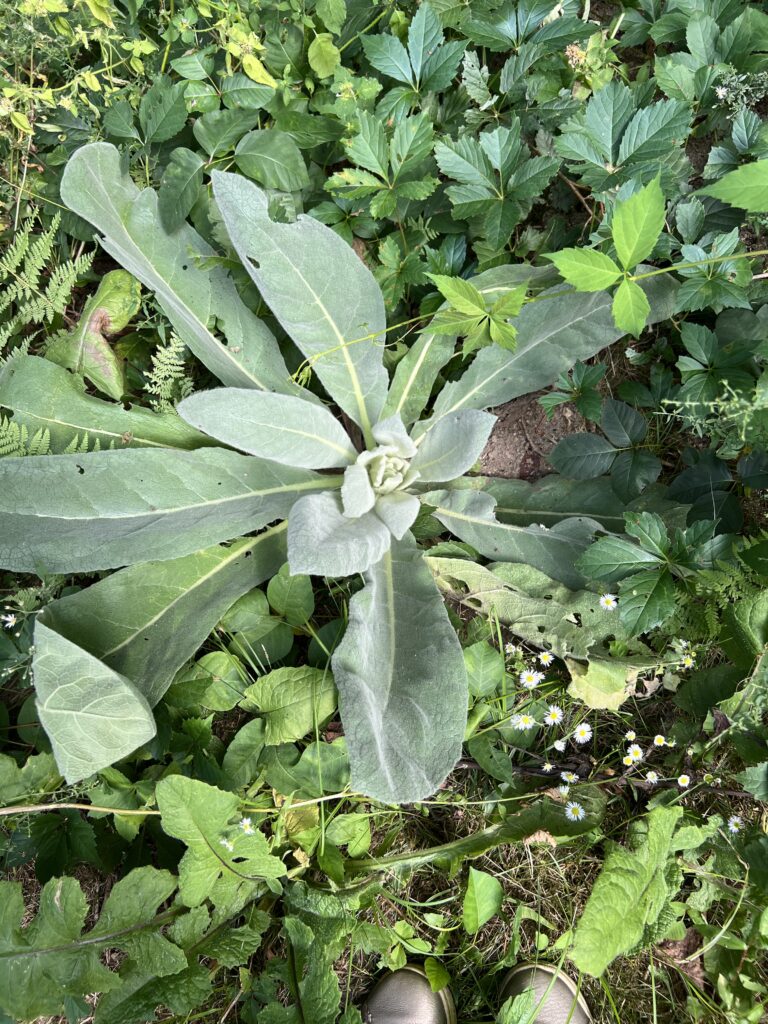
However, they grow very differently.
How to Tell the Difference
1. Growth Pattern
- Mullein grows in a low rosette the first year, forming a circular cluster of leaves close to the ground.
- Comfrey grows in clumps with upright stems and spreading leaves.
2. Leaf Texture
- Mullein leaves feel extremely soft and velvety (almost like felt).
- Comfrey leaves feel rougher and more bristly.
3. Flowers
- Mullein produces tall flower stalks (up to 6 feet or more) with small yellow flowers growing upward along a central spike.
- Comfrey produces drooping, bell-shaped flowers in purple, pink, or cream that hang downward in clusters.
4. Root Structure
- Comfrey has a thick, dark taproot with a creamy interior.
- Mullein has a lighter-colored root and a different internal structure.
Why This Difference Matters
Unlike comfrey, mullein does not contain pyrrolizidine alkaloids in the same concentration and is often used differently in herbal practice (especially for respiratory support). Confusing the two won’t usually cause toxicity in the same way as mistaking foxglove would — but accurate identification still matters.
When discussing comfrey medicinal uses, always confirm:
- Bell-shaped drooping flowers
- Rough, bristly leaves
- Thick dark taproot
If you see tall yellow flower spikes, you’re looking at mullein — not comfrey.
How to Harvest Safely
Once you confirm proper identification:
- Harvest mature leaves in late spring or early summer.
- Use gloves if you have sensitive skin (the hairs can irritate).
- Avoid harvesting near roadsides or sprayed areas.
If you ever feel unsure, consult a local herbalist, extension office, or plant identification guide before using the plant medicinally.
Why Proper Identification Matters
When discussing comfrey medicinal uses, safety must come first. While comfrey offers powerful topical benefits, using the wrong plant could cause harm.
Correct identification ensures you:
- Protect yourself from toxic look-alikes
- Use the correct plant parts
- Maintain credibility as a responsible herbalist
Herbal wisdom begins in the garden. Learn the plant well before you bring it into your apothecary.
Who Should NOT Use Comfrey?
Avoid comfrey if you:
- Are pregnant or breastfeeding
- Have liver issues
- Plan long-term internal use
- Want to apply it to large open wounds
Children should only use comfrey under professional supervision.
Frequently Asked Questions About Comfrey Medicinal Uses
Comfrey offers powerful topical benefits when used correctly. Herbalists value comfrey for its ability to support tissue repair, reduce inflammation, and soothe sore muscles and joints. The plant contains allantoin, which encourages cell regeneration, and rosmarinic acid, which helps calm inflammation.
People commonly use comfrey externally for:
Bruises
Sprains and strains
Muscle soreness
Minor cuts and scrapes
Dry or irritated skin
Because of naturally occurring pyrrolizidine alkaloids (PAs), experts recommend using comfrey externally only and for short periods.
While comfrey (Comfrey) originally came from Europe and Asia, various Native American tribes adopted it after settlers introduced the plant. Traditional herbal practices used comfrey externally for wound care, swelling, and bone support.
Many tribes already relied on native plants with similar properties for healing skin injuries and inflammation. Once comfrey became available, some incorporated it into poultices and topical preparations for sprains, bruises, and minor wounds.
Yes, it is completely legal to grow comfrey in the United States. Gardeners and homesteaders often plant comfrey for medicinal, composting, and permaculture purposes.
Comfrey grows aggressively, so choose its location carefully. Once established, it spreads easily and becomes difficult to remove. Some states may regulate specific varieties in agricultural contexts, but for home gardening, comfrey remains legal nationwide.
Experts strongly advise against eating comfrey. The plant contains pyrrolizidine alkaloids (PAs), which may damage the liver when consumed internally. Because of these risks, modern herbalists recommend using comfrey externally only.
In the past, some traditional practices used comfrey tea or internal preparations. However, current research highlights safety concerns. Today, most reputable herbal authorities discourage internal use altogether.
If you want to build a safe home apothecary, reserve comfrey for topical salves, oils, and poultices.
Yes. Comfrey grows easily in most climates. It prefers full sun to partial shade and well-drained soil. Once established, it becomes difficult to remove.
Both leaves and roots contain beneficial compounds. Roots contain higher concentrations of active constituents but also higher levels of pyrrolizidine alkaloids.
Why Comfrey Remains Popular in Herbal Medicine
Despite modern cautions, comfrey remains one of the most respected topical herbs in traditional herbalism. When used correctly and externally, it offers powerful support for:
- Bruises
- Sprains
- Muscle soreness
- Minor skin irritation
As with all herbs, wisdom matters. Respect the plant. Use it thoughtfully. Learn before you apply.
Herbal medicine works best when you combine tradition with informed safety.
Comfrey stands out as a potent topical herb with a long history of supporting tissue repair and reducing inflammation. Its reputation as “knitbone” didn’t appear by accident.
However, safe use matters. Stick to external applications, limit duration, and consult a professional if you have concerns.
If you grow medicinal herbs in your garden or build a natural home apothecary, comfrey may become one of your most reached-for plants — especially for bumps, bruises, and sore muscles.
Medical Disclaimer
The information provided in this article is for educational purposes only and is not intended to diagnose, treat, cure, or prevent any disease. I am not a medical professional. Always consult with a qualified healthcare provider before using herbal remedies, especially if you are pregnant, nursing, taking medication, or have a medical condition. Comfrey contains pyrrolizidine alkaloids and should not be taken internally. Use responsibly and at your own discretion.