Espresso Machines Under $1000
If you’ve been dreaming about pulling café-quality espresso at home, you’re in the right place. Finding the best espresso machines under $1000 can feel overwhelming, there are tons of machines, different features, and a wide price range to consider. But here’s the truth: you don’t need to spend thousands to get rich, flavorful espresso, creamy milk drinks, and a true barista experience in your own kitchen.

This post may contain affiliate links, which means I may earn a small commission if you choose to make a purchase through my links, at no extra cost to you. I only recommend products I personally use, love, or believe will genuinely add value to your home and kitchen.
In this guide, I’m walking you through the top picks, what actually matters when choosing an espresso machine, and how to find the sweet spot between performance and price point.
Whether you’re a beginner or a growing home barista, this will help you choose the right espresso machine!
How Much Are You Really Spending at Coffee Shops? (And How to Do It Better at Home)
If you’re anything like me, grabbing coffee used to feel like a tiny, harmless treat. Just a quick stop at Dunkin’ Donuts on the way out the door… no big deal, right?
That’s exactly what I told myself for a long time.
But here’s the thing, those “just a few dollars” moments have a way of quietly stacking up. It’s not something you notice day to day, but over time it becomes a real part of your monthly budget… whether you planned for it or not.
When I finally slowed down and actually looked at what I was spending, it was eye-opening. Not in a dramatic, guilt-filled way, but in a wow, I had no idea kind of way.
And that’s when I started asking a better question:
What if I could make coffee at home that I actually love… and spend way less doing it?
Because let’s be honest, most of us aren’t just paying for coffee. We’re paying for convenience, habit, and that little moment of comfort in a busy day.
But what I’ve learned (and what I’m going to show you next) is that you don’t have to give that up to save money.
You can still have that cozy, satisfying cup…
You can still have a routine you look forward to…
Just without the constant drive-thru trips and the price tag that comes with them.
Later in this post i’ll break down what that daily coffee habit is really costing, and how easy it is to do it better at home.
But first, let’s go over….
Why $1000 Is the Sweet Spot for Espresso Machines
When it comes to espresso machines, the $500–$1000 price range is truly the sweet spot. Below that, many entry-level machines cut corners. Above that, you’re stepping into commercial espresso machines or prosumer-level gear like La Marzocco—amazing, but often overkill for home use.
At this price point, you can expect:
- Better water temperature stability
- Stronger steam pressure for milk drinks
- More durable stainless steel construction
- Features like PID controller and pressure gauges
- Built-in grinder options in some Breville machines (a must have in my book!)
This range gives you consistent results, better control over grind size, and the ability to pull a truly excellent espresso shot.
What to Look for in the Best Espresso Machine
Before jumping into the top espresso machines, let’s break down what actually matters.
1. Boiler Type
Most machines under $1000 use single boilers, meaning they handle brewing and steaming separately.
- Single boiler machines: Affordable, but you wait between brewing and steaming
- Heat exchanger / dual boiler machines: Rare under $1000 but ideal for efficiency
If you want faster workflow, prioritize machines with better boiler performance.
2. PID Temperature Control
A PID controller helps regulate water temperature precisely.
Without it, your espresso may taste inconsistent, too bitter or too sour.
3. Built-In Grinder vs Separate Grinder
Some Breville machines include an integrated grinder.
Pros:
- Saves space
- Convenient for beginners
Cons:
- Less control than standalone grinders like the Baratza Sette 270
4. Steam Wand Performance
If you love lattes or cappuccinos, your steam wand matters.
Look for:
- Strong steam pressure
- Easy control for microfoam
- Ability to steam milk quickly
5. Build Quality
Stainless steel machines last longer and maintain heat better.
Plastic-heavy builds? Not ideal long-term.
6. Ease of Use
Your experience level matters.
- Beginners → look for easier machines
- Intermediate → more manual control
- Advanced → manual espresso machine setups
Top Best Espresso Machines Under $1000
Let’s dive into the top picks.
1. Breville Barista Express (this was my favorite)
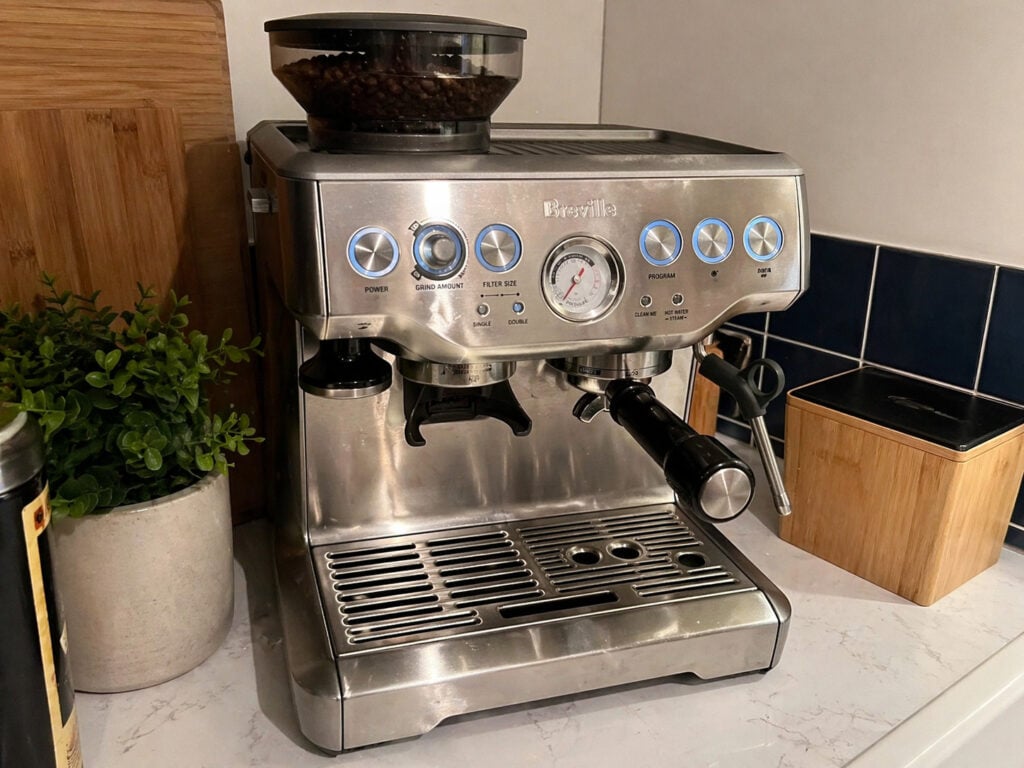
Best All-in-One Best Espresso Machine under $1000
The Breville Barista Express is one of the most popular home espresso machines for good reason.
Key Features:
- Built-in grinder
- 54mm portafilter
- Pressure gauge
- Stainless steel body
- Powerful steam wand
This Breville machine is ideal for beginners who want a complete setup without buying separate equipment.
The integrated grinder allows you to control grind size easily, which is essential for dialing in your espresso shot.
Why we like it
This is the machine I always recommend for beginners starting their espresso journey. I love that everything is in one place, you don’t have to figure out grinders right away. It makes the whole process feel less intimidating, especially your first time pulling a shot.
2. Breville Bambino Plus
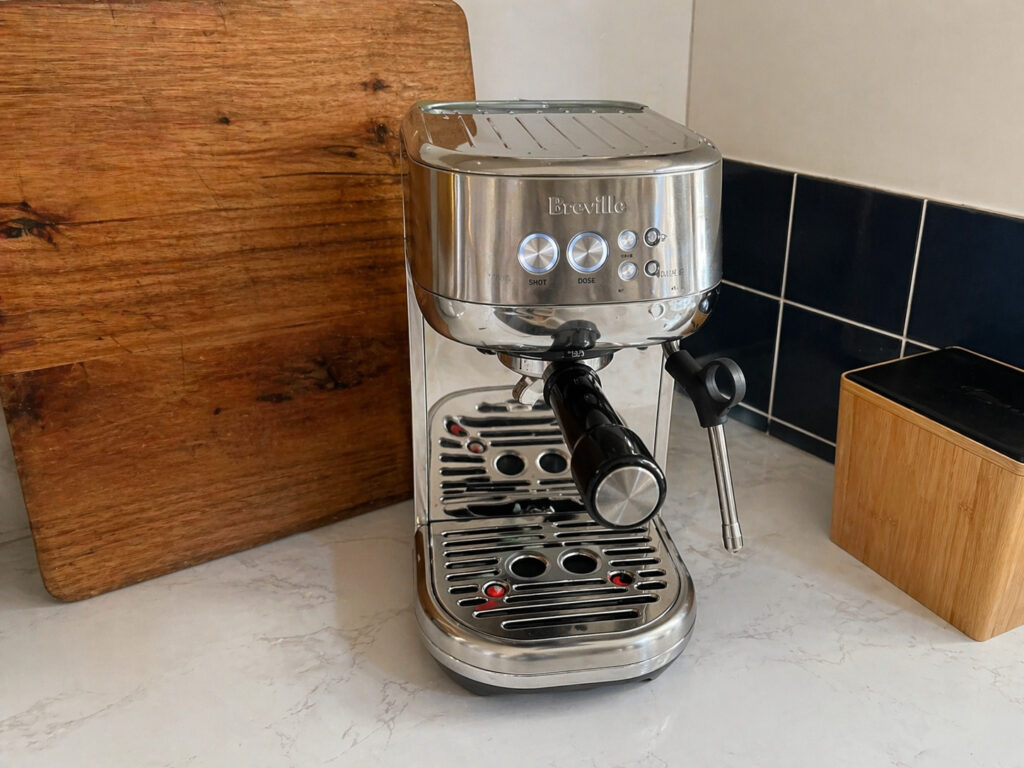
Best Compact Option
The Breville Bambino Plus is small but powerful.
Key Features:
- Fast heat-up time (3 seconds)
- Automatic milk frothing
- Compact design
- Strong steam wand
This is one of the best espresso machines for small kitchens or first-time users.
It delivers consistent water temperature and makes it easy to steam milk for lattes.
Why we like it
I love this machine for busy mornings. If you’re juggling kids, homeschooling, or just life in general, this machine takes the guesswork out of espresso. The automatic steam wand is a game changer when you don’t want to fuss with milk.
3. Rancilio Silvia
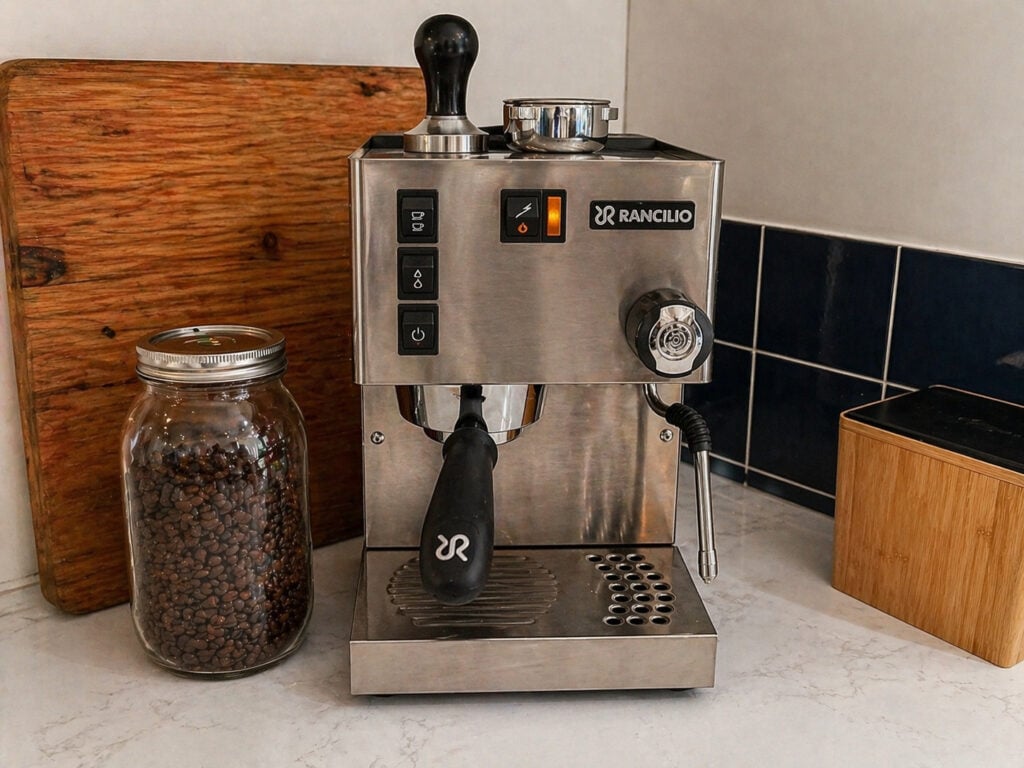
Best for Serious Home Baristas
The Rancilio Silvia is legendary in the world of home espresso.
Key Features:
- Commercial-grade group head
- Heavy-duty build
- Powerful steam wand
- Single boiler system
This machine requires a little more skill, but rewards you with café-quality espresso.
Pair it with a high-quality grinder and you’ll get incredible results.
Why we like it
This machine feels like a step into the “real” world of espresso. If you enjoy learning skills and dialing things in, this one is incredibly rewarding. It’s not the easiest—but that’s exactly why it’s so satisfying when you finally pull the perfect shot.
4. Gaggia Classic Pro
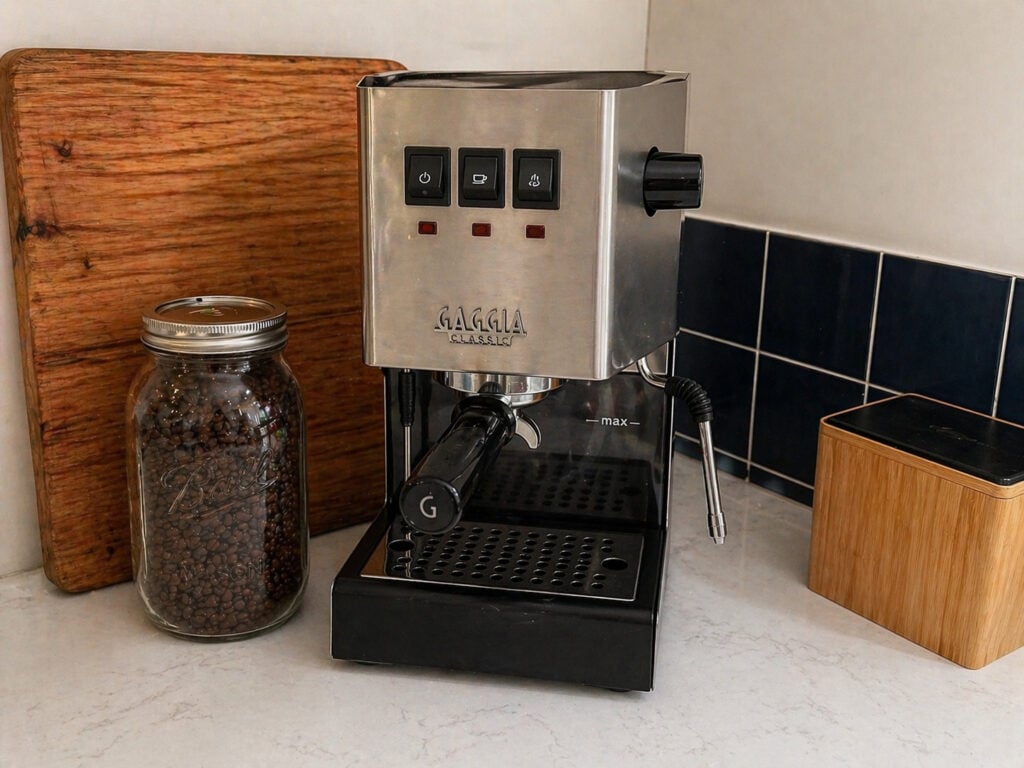
Best Budget-Friendly Pro Machine
The Gaggia Classic Pro is one of the best entry-level machines with real espresso capability.
Key Features:
- 58mm portafilter
- Commercial-style group head
- Solid build quality
- Manual control
It’s a fantastic option for those who want to learn the brewing process and improve their espresso skills.
Why we like it
I love how this machine grows with you. It’s one of those machines where you can start simple and slowly improve your technique. If you’re someone who enjoys learning and tweaking things, this is a really fun machine to own.
5. Breville Barista Pro
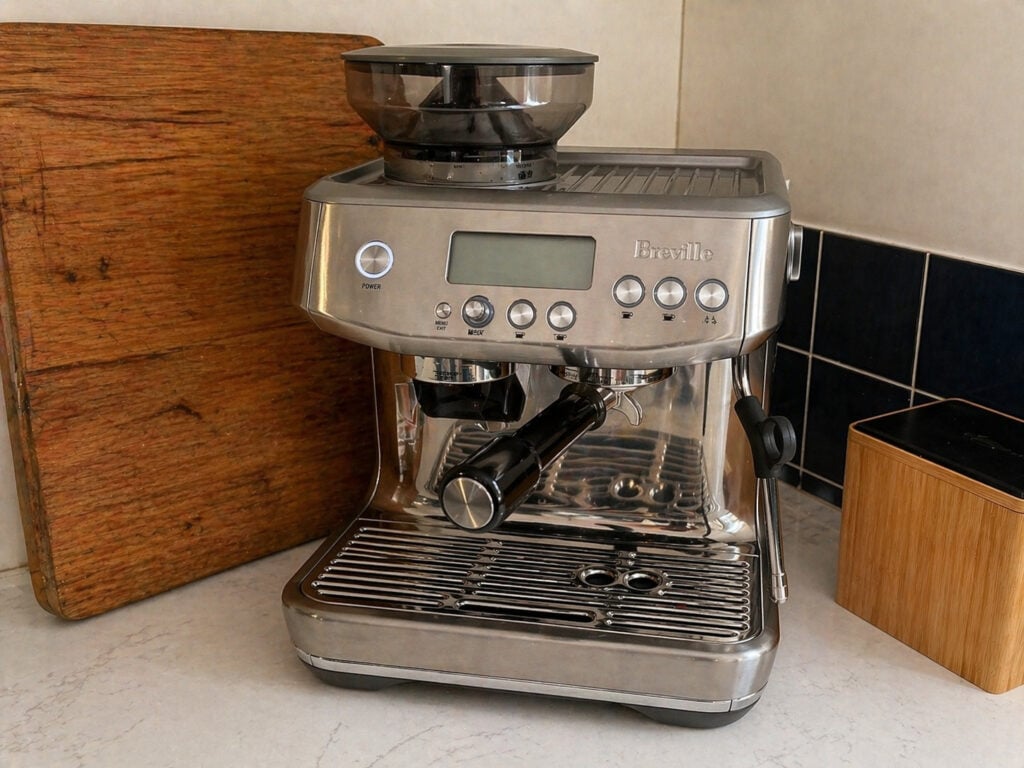
Best Upgrade from Barista Express
The Breville Barista Pro builds on the Express with faster performance.
Key Features:
- Improved grinder
- Faster heating system
- LCD display
- Better workflow
If you want something more advanced but still user-friendly, this is a great next-level option.
Why we like it
This is the machine I’d personally upgrade to after using an entry-level model. It feels faster, smoother, and just more refined. If you make espresso daily, that improved workflow really matters.
6. Breville Barista Touch
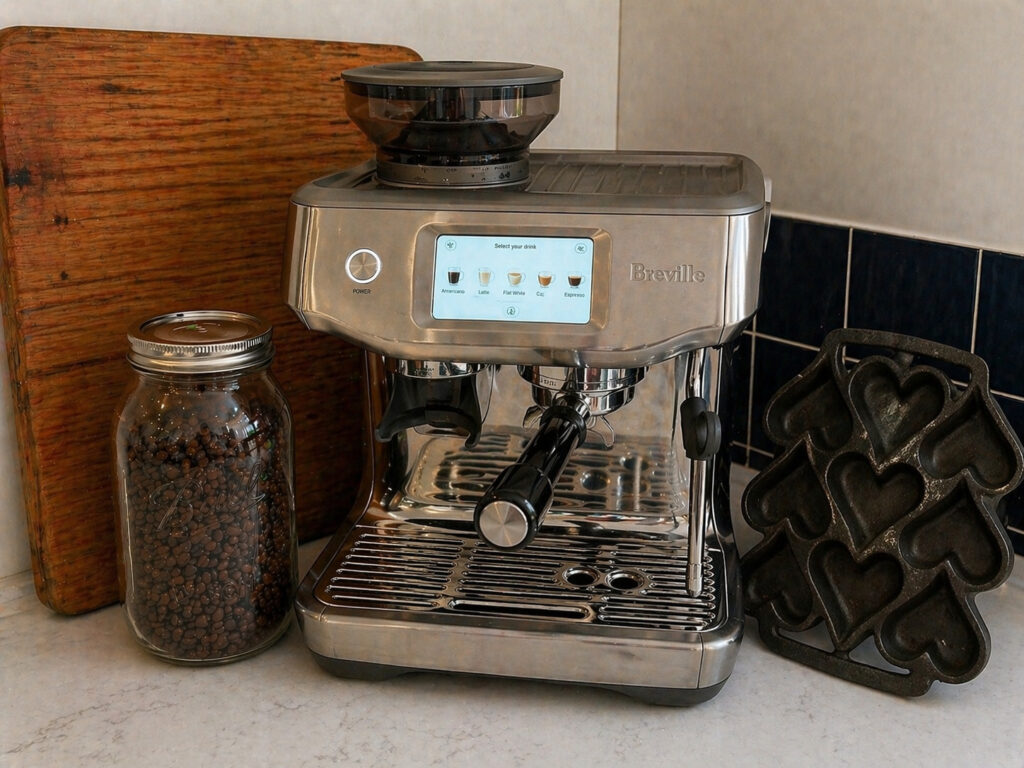
Best for Ease of Use
This machine is all about simplicity.
Key Features:
- Touchscreen interface
- Automatic milk texturing
- Built-in grinder
- Custom drink settings
Perfect for busy mornings when you want great coffee without the learning curve.
Why we like it
This is perfect if you want great coffee without the learning curve. I think of it as the “busy mom espresso machine”—you tap a button and get a latte without standing there measuring and timing everything.
Built-In Grinder vs Separate Grinder
If you’re serious about espresso, your grinder matters just as much as your machine.
Machines like the Breville Barista Express are convenient, but pairing a machine like the Rancilio Silvia with a dedicated grinder often produces better espresso.
Manual vs Semi-Automatic vs Super-Automatic Machines
- Manual Espresso Machine- Full control over the brewing process—great for experienced users.
- Semi-Automatic Machines- Most popular option. You control grind, tamp, and shot timing.
- Super-Automatic Machines- Press a button, and everything happens automatically.
Example: Jura Z10
These are convenient but often come at a much higher cost.
Key Features That Make a Great Espresso Machine
- Water Temperature Stability- Consistent water temperature ensures balanced extraction.
- Steam Pressure- Strong steam pressure helps create silky microfoam.
- Group Head Quality- A good group head distributes water evenly across your coffee puck.
- Water Reservoir- Larger water tanks mean fewer refills.
How to Get the Perfect Shot
Even the best espresso machine needs proper technique.
- Use fresh coffee beans
- Adjust grind size carefully
- Tamp evenly
- Aim for 25–30 second extraction
- Use filtered water
Common Mistakes to Avoid
- Using pre-ground coffee
- Ignoring grind size
- Poor tamping technique
- Wrong water temperature
- Not cleaning your machine
Best Espresso Machine for Beginners
The best option for beginners is the Breville Bambino Plus or Breville Barista Express.
They offer:
- Ease of use
- Consistent results
- Built-in features that simplify the process
Best Espresso Machine for Intermediate Users
If you’re ready to level up:
- Rancilio Silvia
- Gaggia Classic Pro
- Breville Barista Pro
These machines give you more control and better results.
Best Espresso Machine for Advanced Users
Advanced home baristas should consider:
- Profitec GO
- Lelit Anna
These offer precision and customization.
How Much Are You Really Spending at Coffee Shops? (And How to Do It Better at Home)
If you’re anything like me, grabbing coffee used to feel like a small, harmless habit, until I actually added it up. For a long time, I was stopping at Dunkin’ Donuts regularly, thinking, “It’s just a few dollars.” But those “few dollars” add up fast.
The Real Cost of Daily Coffee Runs
Let’s break it down:
- Average coffee shop drink: $4–$7
- 5 days a week: $20–$35
- Monthly: $80–$140
- Yearly: $960–$1,680
And that’s just for one person.
If you’re grabbing specialty drinks, adding snacks, or going more than once a day… it can easily climb over $2,000 a year without even realizing it.
That was a wake-up call for me.
Why Making Coffee at Home Just Makes Sense
Once I started making coffee at home, I realized two things pretty quickly:
- It’s way cheaper
- It can actually taste better
Even if you invest in a quality espresso machine, you’re paying upfront instead of endlessly at the drive-thru.
Example Breakdown:
- Bag of good-quality coffee beans: ~$15
- Cost per cup at home: $0.50–$1.00
Compare that to $5 per drink at a coffee shop, and the savings are obvious.
Better Coffee Than the Drive-Thru?
Here’s the part that surprised me most…
With the right setup, you can make coffee that’s better than what you’re getting out.
At home, you control:
- The quality of your beans
- The freshness (this makes a huge difference)
- The strength and flavor
- The milk (raw, whole, almond—whatever you prefer)
- The sweetness (no overly sugary syrups unless you want them)
Once I started dialing in my routine, I honestly stopped craving my old coffee runs.
Is It Worth the Investment?
If you’re on the fence about getting an espresso machine or upgrading your setup, here’s a simple way to look at it:
If you spend $1,200 a year on coffee shop drinks, even a higher-end machine can pay for itself in under a year.
After that? It’s just savings!
Ready to Make the Switch?
If you’ve been thinking about skipping the drive-thru and creating your own coffee setup at home, this is your sign. You don’t have to go all-in right away, even small changes can make a big difference.
And once you taste that first really good homemade latte… there’s a good chance you won’t be going back.
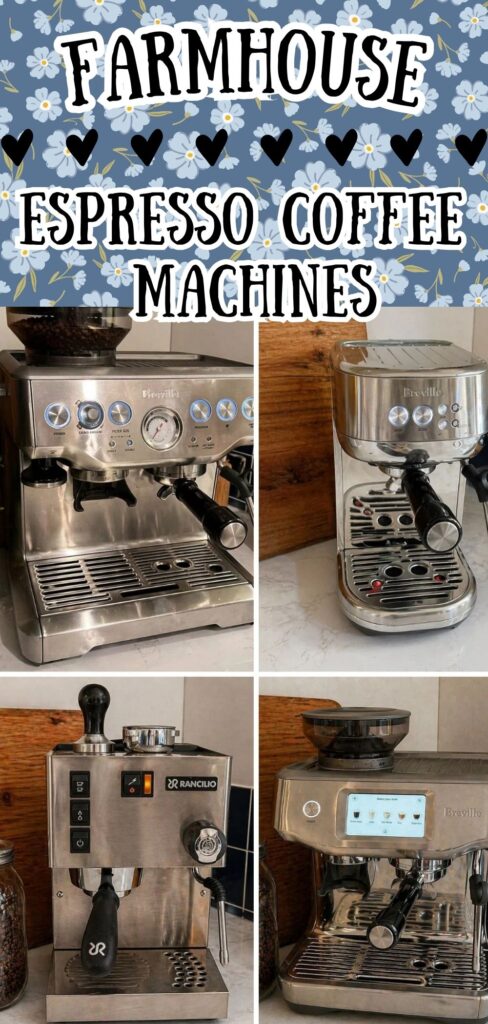
Finding the best espresso machines under 1000 doesn’t have to be complicated.
Focus on:
- Build quality
- Temperature control
- Steam wand performance
- Ease of use
Whether you choose a Breville machine, a Rancilio Silvia, or a Gaggia Classic Pro, you can create incredible espresso at home.
This price range truly offers the perfect balance between affordability and performance.